




Fishing in Spain
Fishing in Spain can mean very different things depending on where you are standing. An angler on the Costa del Sol might be casting into the Mediterranean from a harbour wall, while someone in Galicia could be fishing rough Atlantic water for bass. Travel inland and the same country offers reservoirs holding carp and black bass, mountain rivers with trout, and large river systems known for catfish and other freshwater species.
That variety is one of Spain’s biggest advantages as a fishing destination. The country has a long coastline facing both the Atlantic Ocean and Mediterranean Sea, major river systems, thousands of reservoirs and a fishing culture that is deeply connected with coastal communities. Recreational fishing is common among both residents and visitors, although the rules can be more complicated than they first appear.
Spain does not operate one simple fishing licence covering every form of recreational angling in every part of the country. Regional governments have substantial responsibility for freshwater fishing, while marine fishing licences and restrictions can also vary according to location and method. A licence that is suitable for one region may not automatically cover another.
This makes a little preparation worthwhile. The actual fishing is often straightforward. The paperwork can be the part that catches visitors out.
For most recreational anglers, the first decision is whether to fish saltwater or freshwater. From there, the target species, season and region determine the most practical approach.
Sea Fishing in Spain
Spain offers several thousand kilometres of coastline, and recreational sea fishing is possible across much of it. Conditions differ sharply between the Atlantic and Mediterranean coasts, however, so anglers should not treat the entire Spanish coastline as one fishery.
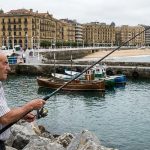
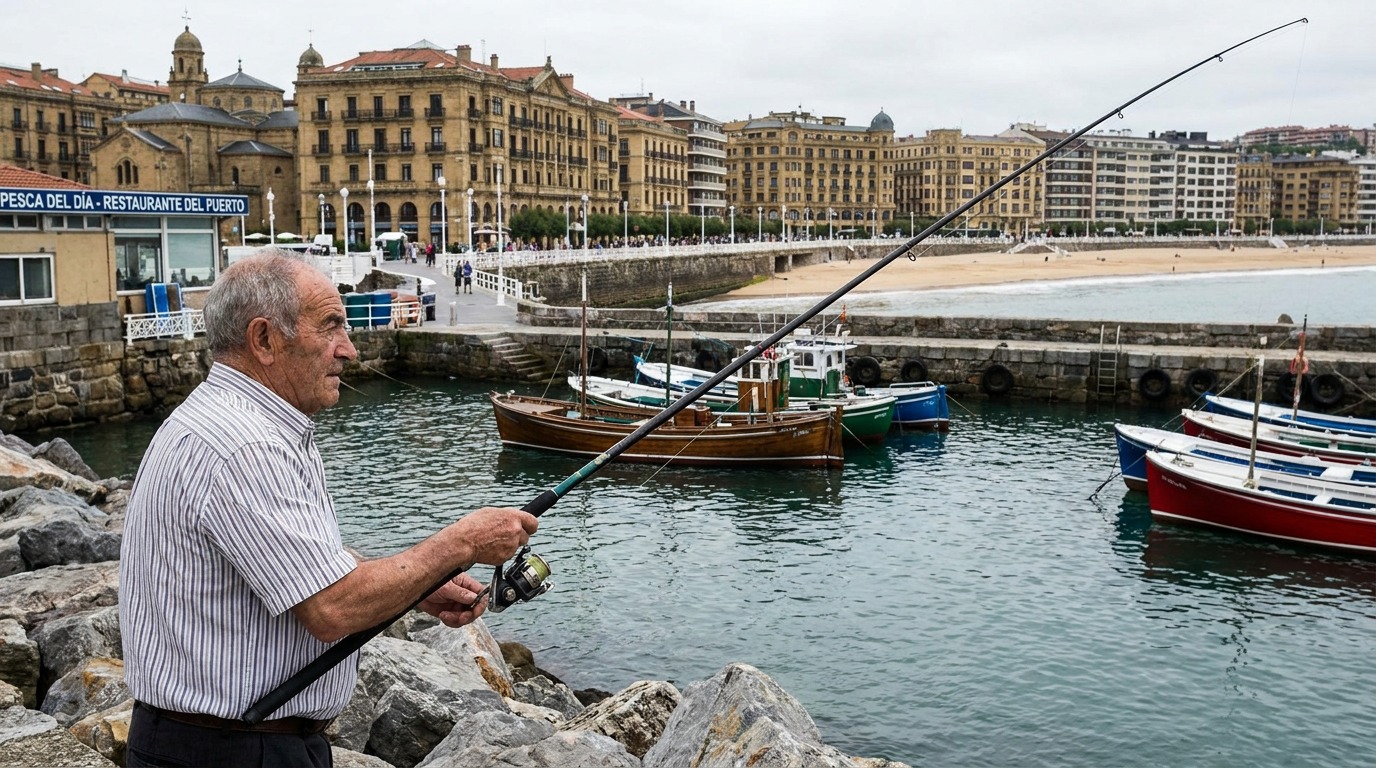
The Mediterranean generally has calmer water and smaller tides. Shore fishing is popular from beaches, rocky points, breakwaters and harbours, although access restrictions apply in some areas. Sea bream, mullet, seabass and smaller predatory fish are common targets close to shore, while boat anglers can reach deeper water where tuna, dentex, amberjack and other larger species are found.
The Atlantic coast is usually more exposed. Galicia, Asturias, Cantabria and the Basque Country face stronger swells, larger tidal movement and generally rougher conditions. The fishing can be excellent, particularly for species associated with rocky Atlantic coastlines, but the environment demands more respect. A place that looks perfectly fishable in calm conditions can become dangerous when swell reaches exposed rocks.
Southern Spain adds another variation. The waters around Andalusia connect the Mediterranean with the Atlantic through the Strait of Gibraltar. Currents can be strong, and the movement of migratory species through the area has helped make it an important destination for offshore anglers.
The Canary Islands provide a very different style of fishing again. Their volcanic coastline drops into deep Atlantic water relatively quickly, allowing anglers to encounter pelagic fish without necessarily travelling the same distances offshore that might be required elsewhere. Tuna, wahoo and billfish are among the species associated with offshore sport fishing around the islands.
Mediterranean Fishing
Spain’s Mediterranean coastline stretches from Catalonia in the northeast through Valencia, Murcia and Andalusia. It also includes the Balearic Islands.
For visitors staying in coastal resorts, shore fishing is often the easiest starting point. Light spinning gear can be used around rocks, harbours and beaches, while bait fishing remains common among local anglers. Sea bream species are particularly popular targets, with several varieties appearing around rocky ground, sand and structures.
European seabass is another well known target, although results depend heavily on location and conditions. Anglers often look for moving water, harbour entrances, rocky shorelines and periods when baitfish are present.
Predatory species such as bluefish and leerfish can also occur in Mediterranean waters. These fish are generally more suitable for lure fishing and can provide considerably more excitement than sitting beside a rod waiting for a bream to become interested in a piece of bait.
Boat fishing opens access to deeper reefs and offshore water. Jigging, trolling and bait fishing are all used, depending on the species being targeted.
Large tuna are present in Spanish Mediterranean waters, but tuna fishing is heavily regulated and should not be approached as though it were ordinary recreational angling. Catch rules, authorisations and permitted methods can change, particularly for protected or tightly managed species.
Atlantic Fishing
Northern Spain is better suited to anglers who enjoy rougher coastal fishing.
Rock fishing is widespread in Galicia and along parts of the northern coast. Seabass are a major target, along with wrasse, conger and various bottom feeding species. Conditions can be productive during periods of movement and colour in the water, although safety becomes more important as swell increases.
Galicia has a particularly strong fishing culture. Commercial fishing remains economically important there, and recreational anglers benefit from access to a wide range of coastal environments, including estuaries, rocky points and sheltered bays.
The Atlantic side of Andalusia, including areas around Cádiz and Huelva, can also produce good shore and boat fishing. Tidal movement has a stronger influence here than on much of the Mediterranean coast.
Surfcasting is popular from long beaches, particularly where channels, sandbanks or river mouths create feeding areas. Species encountered can include sea bream, bass and other coastal fish.
Freshwater Fishing in Spain
Spain’s freshwater fishing is less obvious to many tourists, but it can be just as productive as the coastline.
Large reservoirs are found across much of the country. Many were originally built for water storage, irrigation or hydroelectric use, but they have developed into established fisheries. Carp, black bass, barbel, pike and catfish are among the species targeted in these waters.
River fishing ranges from mountain trout streams in northern Spain to large lowland rivers with very different fish populations.
The contrast can be considerable. A fly angler fishing a cold stream in the Pyrenees is participating in almost a different sport from someone using heavy tackle for giant catfish in the Ebro.
Carp Fishing
Spain has become a popular destination for carp anglers, particularly around large reservoirs and river systems.
Carp can reach substantial sizes, although the quality of fishing varies considerably between venues. Some reservoirs have healthy populations of medium sized fish, while others have developed reputations for larger specimens.
Fishing large Spanish reservoirs requires more preparation than fishing a small commercial lake. Water levels can change significantly, banks may be difficult to access and fish can move considerable distances.
Baiting strategies need to reflect the scale of the water. Dumping large amounts of bait into an unfamiliar reservoir without locating fish first is a fairly expensive way to feed wildlife.
Heat is another issue. Summer daytime temperatures in inland Spain can be severe. Anglers planning long sessions need shade, drinking water and sensible working hours, especially in southern and central parts of the country.
Catfish Fishing
The River Ebro is internationally known for large wels catfish.
These fish can grow to impressive sizes and are commonly targeted using heavy tackle from both bank and boat. The lower Ebro and reservoirs connected with the river have supported a substantial guided fishing industry.
A catfish session is very different from ordinary coarse fishing. Strong rods, heavy line and appropriate terminal tackle are needed because large fish can place considerable stress on equipment.
Local guides can be useful for visiting anglers because access, fish location and regulations are not always obvious. They also provide suitable equipment, which saves the traveller from trying to explain an oversized catfish rod to an airline baggage desk.
The ecological position of catfish is also worth recognising. Wels catfish are not native to Spain and their presence is controversial because introduced species can affect native fish populations. Regulations regarding invasive species can affect how fish must be handled, so anglers need to check regional rules before fishing.
Black Bass Fishing
Black bass are another introduced species that have developed a strong following among Spanish anglers.
Reservoirs in central and southern Spain can provide excellent bass fishing. Lure fishing is the standard approach, with soft plastics, crankbaits, spinnerbaits and topwater lures all used according to season and conditions.
Spanish reservoir bass can behave much like bass elsewhere, but fluctuating water levels create an additional challenge. Cover that held fish during one visit may be several metres above the waterline during another.
Spring and autumn are popular periods because temperatures are generally more comfortable and fish can be more active in accessible water. Summer fishing can still be productive, but deeper water and early or late sessions often become more important.
Trout Fishing
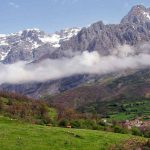
Northern and mountainous regions provide most of Spain’s best known trout fishing.
The Pyrenees, Cantabrian Mountains and cooler river systems of northern Spain hold brown trout, and some waters support other salmonid fishing as well.
Fly fishing is common, although permitted methods depend on the water and regional rules. Some stretches operate under special management arrangements, restricted seasons or catch and release requirements.
Water temperature becomes important during summer. Mountain rivers may remain cool enough to fish, while lower stretches can become less suitable during hot weather.
For anglers used to northern Europe, Spanish trout fishing can be a pleasant surprise. The scenery is excellent, fishing pressure can vary greatly between rivers, and insect activity can produce productive dry fly conditions.
Fishing Licences in Spain
Fishing licences in Spain require more attention than many visitors expect.
Freshwater fishing is largely administered at regional level. Spain is divided into autonomous communities, and each can operate its own licence system, seasons, protected waters and fishing rules.
A freshwater licence issued in one autonomous community does not necessarily provide unrestricted fishing rights throughout Spain. Some arrangements allow recognition across participating regions, but anglers should check the exact licence needed for the location they intend to fish.
Marine recreational fishing is also regulated, and different licence categories may apply to shore fishing, boat fishing and underwater fishing.
Visitors should arrange the appropriate licence before fishing rather than assuming one can be purchased later if somebody asks.
Enforcement varies by location, but fishing without the required licence can result in fines and confiscation of equipment or catch in more serious cases.
Regional Differences
The regional system means regulations can differ substantially even when two fishing locations are relatively close together.
Rules can cover season dates, daily catches, fish sizes, permitted bait, fishing methods and protected areas. Freshwater fisheries may also distinguish between ordinary waters and specially managed stretches where additional permits are needed.
Some regions make online licence applications relatively easy, while others can require more administrative steps.
Foreign visitors may need identification details when applying, and processing requirements can differ depending on nationality and residence.
The simplest approach for a short fishing holiday is often to use a reputable local charter, guide or tackle shop that understands the current licensing requirements. They will usually know which licence applies and whether an additional permit is necessary for the chosen water.
That does not remove the angler’s responsibility, but it greatly reduces the chance of turning a fishing trip into an unexpected conversation about Spanish administrative law.
Fish Species Found in Spain
Spain has an unusually broad selection of target species because of its geography.
Saltwater anglers can encounter sea bream, seabass, mullet, mackerel, bonito, tuna, amberjack, dentex, bluefish, leerfish, conger and various smaller reef and bottom species.
The exact catch depends on region, depth, season and technique.
Mediterranean shore anglers tend to see a different mix from those fishing exposed Atlantic rocks. Offshore anglers again encounter another group of species entirely.
Freshwater fisheries include brown trout, barbel, carp, black bass, pike and catfish among other species.
Several popular freshwater sport fish are introduced rather than native. This creates management issues because recreational value and environmental policy do not always point in the same direction.
Sea Bream
Sea bream are among the most commonly targeted coastal fish.
Several species occur in Spanish waters, and they can be caught from beaches, rocky areas, harbours and boats.
Bait fishing is widely used. Shellfish, worms and other natural baits can be effective, although local preference varies considerably.
Bream often feed around structure, mixed ground or areas where food is disturbed by current. Light tackle can make smaller fish enjoyable, while larger specimens are considerably stronger than their body shape might suggest.
European Seabass
European seabass are valued by both recreational and commercial fishers.
They are found on both Atlantic and Mediterranean coasts, although abundance varies.
Lure fishing is popular, particularly around rocky areas, river mouths and moving water. Bait fishing can also be effective.
Bass fishing often improves when conditions are less than perfect for the person holding the rod. Wind, waves and coloured water can bring fish into feeding areas close to shore.
Tuna and Offshore Species
Spain is also an important destination for offshore game fishing.
Different tuna species can occur around the mainland, Balearic Islands and Canary Islands. Other offshore targets include mahi mahi, wahoo and billfish depending on location.
This type of fishing is best organised through a specialist charter unless the angler already has suitable offshore experience and access to an appropriately equipped boat.
Regulations surrounding tuna can be strict, with quotas, seasonal controls and reporting requirements affecting recreational fishing. Anglers should rely on current official rules and experienced operators rather than advice from an old fishing forum.
Shore Fishing in Spain
Shore fishing is the most accessible option for most visitors.
A basic spinning or bait setup can be used from many beaches and rocky areas, although fishing is prohibited in some harbours, swimming zones and protected locations.
Tourist beaches can be difficult during the day, particularly in summer. Casting hooks among swimmers is frowned upon for fairly obvious reasons.
Early morning, evening and night sessions are often more practical. They also coincide with periods when many coastal species move closer to shore.
Rock fishing can offer better access to deeper water, but safety becomes more important. Slippery surfaces, unexpected waves and steep access routes create genuine hazards.
Good footwear matters more than having the newest reel.
Surfcasting is widely practiced and can be productive from beaches with deeper channels or nearby structure. Longer rods are normally used to cast bait beyond breaking waves.
Boat and Charter Fishing
Charter fishing is one of the easiest ways for visiting anglers to experience Spanish sea fishing.
A local skipper already knows the productive areas, current regulations and weather patterns. Tackle and bait are usually included, although this should be confirmed when booking.
Charters range from short family trips to serious offshore sessions targeting tuna or billfish.
Prices vary greatly according to boat size, fuel use, fishing method and location. Offshore trolling on a large sport fishing vessel costs considerably more than a few hours of bottom fishing close to shore.
Prospective customers should ask what kind of fishing is actually planned. “Deep sea fishing” is a broad marketing term. One operator may mean catching small bottom fish a few kilometres offshore while another is travelling much farther for large pelagic species.
Private charters provide more control over target species and fishing methods. Shared trips are cheaper but normally follow a predetermined plan suitable for the whole group.
Weather can cause cancellations. This is particularly important on Atlantic coasts and around exposed islands where strong winds or swell can make offshore fishing uncomfortable or unsafe.
Spearfishing in Spain
Spearfishing has an established following in Spain but operates under stricter rules than ordinary rod fishing.
A specific licence is generally required, and additional restrictions can apply regarding equipment, permitted areas and protected species.
Spearfishing is normally conducted while freediving rather than using scuba equipment. Safety is critical because breath hold diving introduces risks that have nothing to do with the fish.
Marine reserves and protected coastal zones can impose complete or partial bans on spearfishing. Local rules should therefore be checked carefully before entering the water.
Visitors should not assume that because they see fish while snorkelling, they are permitted to catch them.
When to Go Fishing in Spain
There is no single best month for fishing throughout Spain.
The country covers several climatic zones, and different species have different seasonal patterns.
Spring and autumn are generally comfortable periods for both freshwater and coastal fishing. Temperatures are moderate and many species are actively feeding.
Summer can be excellent for offshore fishing and some warm water freshwater species, but daytime heat can be difficult inland. Coastal tourist areas also become crowded.
Winter fishing remains possible in many parts of the country, particularly in milder southern areas and the Canary Islands. Northern regions can experience wetter and rougher conditions.
Tides matter more on the Atlantic coast than in most Mediterranean locations. Anglers fishing Galicia, Asturias or Cádiz should pay close attention to tidal movement when planning sessions.
Wind can be just as important. A strong onshore wind can make some beaches difficult to fish while improving conditions in another location around the coast.
Choosing Where to Fish
The best Spanish fishing destination depends more on target species than on the fame of the region.
Someone interested in giant catfish will probably look toward the Ebro system rather than Barcelona’s beaches. A trout angler has little reason to choose the Costa del Sol. An offshore game fishing enthusiast may find the Canary Islands much more interesting than an inland reservoir.
Mediterranean holiday resorts work well for anglers who want to combine fishing with an ordinary family trip. Shore sessions can be fitted around other activities, while charter boats are widely available in major tourist areas.
Northern Spain is better for anglers looking for Atlantic conditions, river fishing and generally greener surroundings.
Inland Spain offers some of the strongest opportunities for specialist freshwater fishing, particularly carp, black bass and catfish.
The Balearic and Canary Islands suit anglers who want an island holiday combined with sea fishing.
Conservation and Responsible Fishing
Spain’s fisheries face many of the same pressures found elsewhere in Europe, including commercial exploitation, habitat changes, invasive species and environmental pressure on freshwater systems.
Recreational anglers form only one part of that picture, but their behaviour still matters.
Size limits, closed seasons and catch restrictions exist to protect stocks. Returning undersized fish carefully is more useful than treating legal limits as optional suggestions.
Marine protected areas deserve particular attention. Spain has a network of reserves and protected zones where fishing can be restricted or completely prohibited.
Freshwater anglers also need to understand rules involving invasive species. Some fish highly valued by sport anglers are classified as non native, which can affect whether they may legally be returned after capture.
These rules can be controversial among anglers, particularly where a species has supported a recreational fishery for decades. Personal disagreement does not change the legal requirement.
Litter is another simple issue. Fishing line, hooks and plastic bait packaging can remain in the environment long after the angler has left. Spain has many heavily visited coastal areas, so leaving a fishing spot cleaner than it was found is a fairly reasonable minimum standard.
Fishing in Spain as a Visitor
For a tourist, the easiest fishing trip is normally one planned around a clear target.
Decide whether the main interest is shore fishing, freshwater fishing or a charter. Then choose a region suited to that style rather than arriving first and hoping the local water contains the right fish.
Bringing personal tackle is practical for dedicated anglers, but casual visitors may find it easier to rent equipment or use a guide.
Airline baggage rules can make rods inconvenient, and transporting large quantities of hooks, weights and tools adds another layer of organisation.
Local tackle shops are extremely useful. They can provide current information about productive baits, access points and conditions that general internet advice cannot match.
Language can occasionally be a barrier outside major tourist areas, but fishing terminology has a useful habit of becoming understandable once somebody starts pointing at lures.
Visitors should also remember that summer heat changes how a fishing day should be organised. Early morning and evening sessions are often both more comfortable and more productive.
Is Spain a Good Fishing Destination?
Spain is one of Europe’s more varied fishing destinations because it combines Mediterranean and Atlantic coastlines with large reservoirs, major rivers and mountain trout water.
The country works equally well for somebody wanting a few hours of casual holiday fishing and an angler travelling specifically for catfish, carp, bass, trout or offshore game species.
The main complication is regulation. Fishing licences, seasons and local rules can vary by region, water and method, so visitors should confirm the current requirements before fishing.
Once that part is handled, the choice becomes much more enjoyable: beach, river, reservoir or boat.